A streamer media kit feels like something you earn after you blow up. Big numbers first, fancy page second. I had it exactly backwards, and so does almost every template on the internet.
I built mine while small, on purpose, and it changed the shape of every partnership conversation since. Here is how to make a streamer media kit that works at your actual size, instead of one that quietly argues against you.
What a Streamer Media Kit Is (and Who Actually Reads It)
A streamer media kit is one page that answers a brand’s questions before they ask: who you are, what you stream, when you are live, what working together looks like, and how to reach you. That is the whole job.
And “brand” is broader than you think. The people who actually open these are indie devs deciding who gets keys, peripheral companies with affiliate slots, local businesses, event organizers, and other creators sizing you up for a collab. Very few of them are Nike. Almost all of them are busy, skimming, and looking for a reason to say yes quickly.
Your streamer media kit exists to make that yes easy.
The Small Streamer Trap: Leading With Numbers You Don’t Have
Download any streamer media kit template and look at the layout. Follower count, average viewers, monthly reach, right at the top in giant type. That layout was designed by and for creators who already have big numbers.
Fill it in as a small streamer and you have built a page whose headline is your smallest fact. Before anyone reads a word about what you actually offer, you have framed yourself by the one thing you do not have yet.
The trap gets worse from there, because the obvious escape is to pad. Round up. Cherry-pick the one spike month. Do not. Your public numbers are a search away, and one caught inflation ends the conversation forever.
I ran into this exact wall building mine. The honest stats, presented as a headline, made the argument against me. The fix was never better numbers. It was a better page.
What to Put in Instead
Flip the structure. A streamer media kit for a small channel should lead with the things that are true at any size:
- What you offer. Your content identity and the formats a brand can actually buy: on-stream shoutouts you genuinely mean, their product woven into real gameplay instead of a script, dedicated segments or full sponsored streams, a pinned link or promo code chat can grab.
- What a partnership looks like. Spell out the working relationship in plain language so a busy person can picture it in thirty seconds. Flexible formats shaped around their launch beat a rigid rate card at this stage.
- Why back a smaller creator. This is your strongest section, so write it with a straight face. In a small chat, every viewer actually sees the message. A recommendation from someone who talks with their community every stream carries weight a mid-roll ad never will. And a brand that gets in early grows with you instead of paying full price later.
Notice that none of that requires a single statistic. Credibility can come from other places: how long you have been at it, the schedule you keep, the causes you are part of. Mine points out that I have streamed under the same handle since 2015 and that I am part of the StackUp Stream Team, which supports military service members and veterans. Both say more about reliability than a viewer count would.
Your Schedule Belongs in It
Sponsors are not just buying your audience. They are buying your reliability, and nothing shows reliability like a schedule that holds.
Put your streaming days right in your streamer media kit, where a brand can see them without asking. That lets them watch you live before they ever reply, and plan campaign timing around when you actually go live. I keep my three days (Friday, Saturday, Sunday) on mine, and I wrote a whole post about building a stream schedule you can actually keep, because the kept part is what a sponsor is really reading.
Where It Should Live
Your streamer media kit should live on your website, as a page. Not as a PDF.
A PDF is stale the day you export it. It grows a new version number every time your schedule shifts, lives in a downloads folder nobody checks, and cannot be dropped into a Twitch panel or a DM as a link. A page is always current, always one URL, and takes two minutes to update.
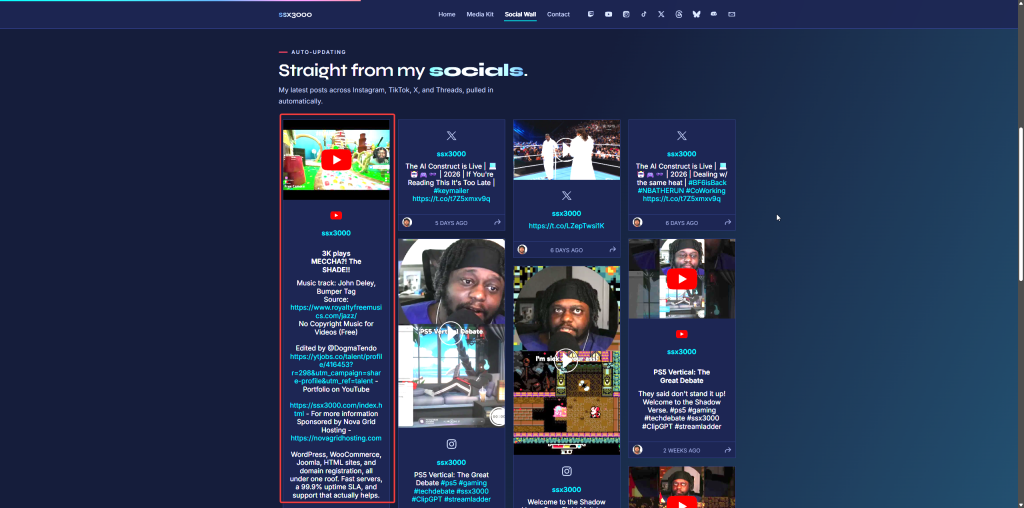
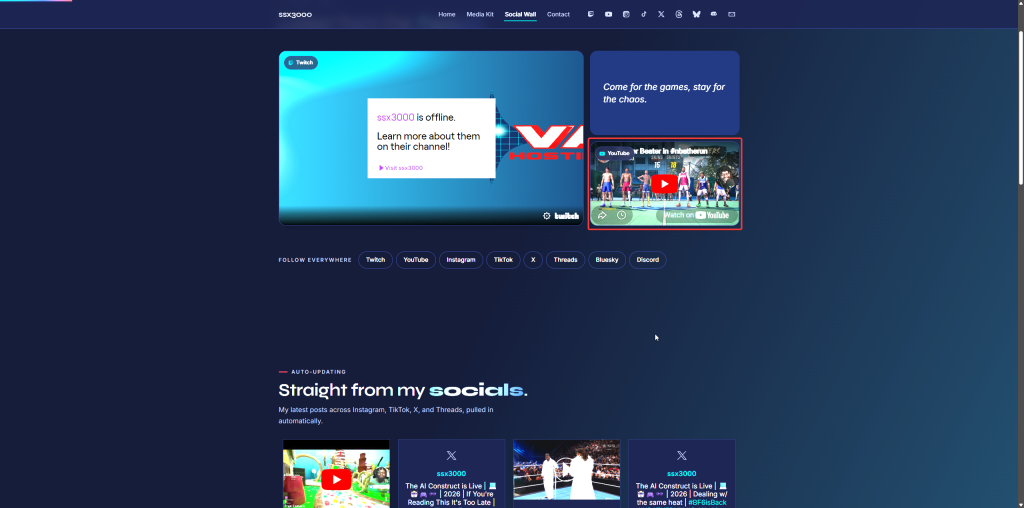
This is half the reason I keep telling people to get a streamer website in the first place. The media kit is the page that pays for the whole site. Mine lives at ssx3000.com/media-kit if you want a living example of everything in this post.
If someone specifically asks for an attachment, export the page to PDF that day and send it. The page is the source of truth. The PDF is a printout.
Keep the Numbers on Request
Leaving stats off the page is not hiding. It is sequencing.
The page’s job is to sell the partnership. When a brand is interested enough to ask about numbers, that is a reply, and a reply is the whole point. Now you are in a conversation instead of being silently judged against a template built for someone else.
So put one line on the page that invites the ask. Mine says a current snapshot of the channel is one email away, and when someone asks, I send real, recent stats with context. Screenshots from the dashboard, not a designed graphic. Honest numbers with a growth story attached beat padded ones every single time. Padding is not even a gamble anymore, because sites like TwitchTracker make every public number checkable in seconds.
Small and honest is a position. Inflated and caught is an ending.
A streamer media kit is not a trophy case. It is a handshake. Build the page now, at the size you actually are, lead with what you offer, and let the numbers arrive as a conversation. The creators who look professional early are the ones who get to stop being small.
Leave a Reply